
Customer.io Event Tracking

#Overview

Using WP Fusion you can track events from supported plugins in Customer.io.

#How it works

You can configure events globally, or on individual courses, forms, and products.
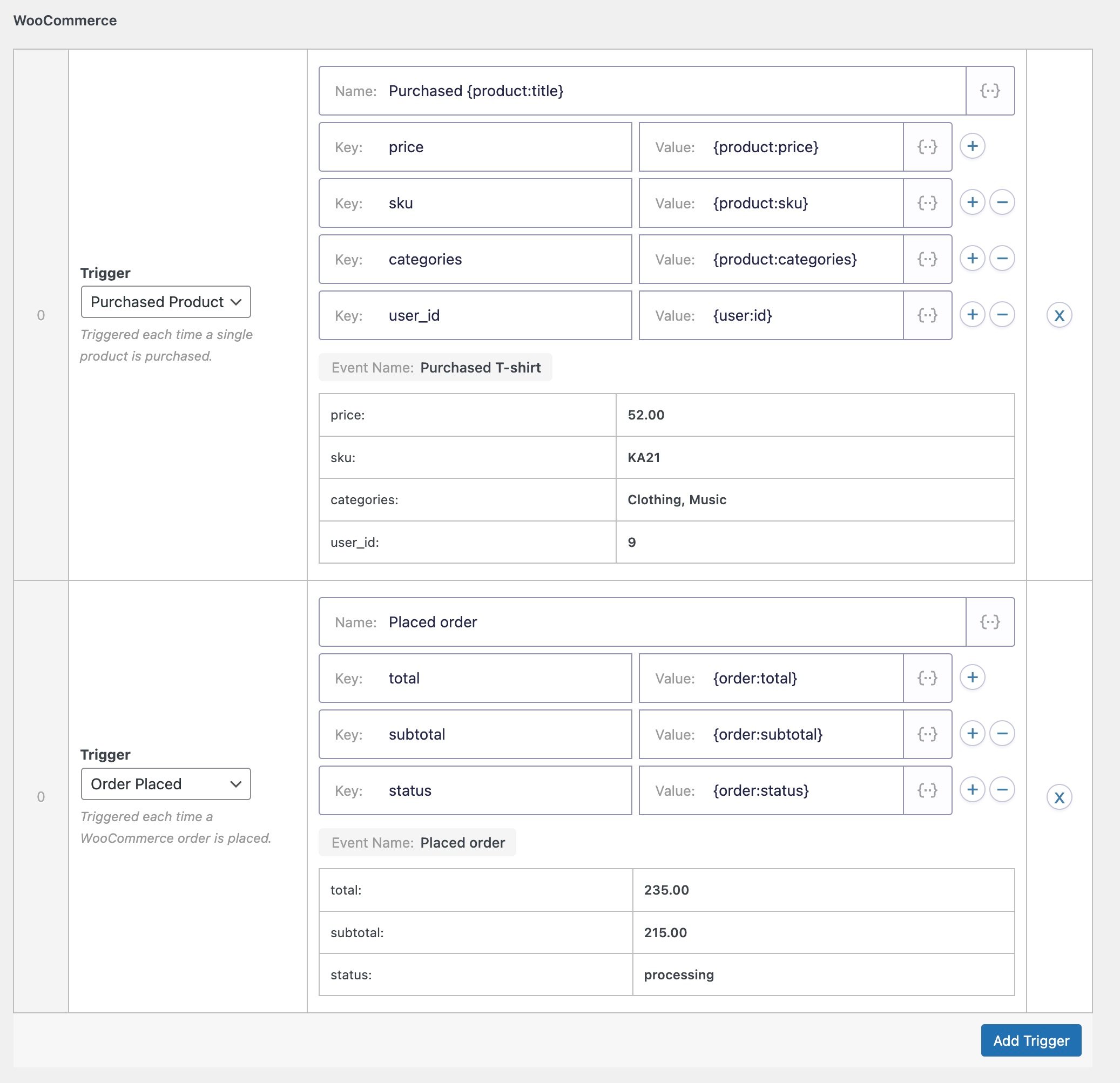
Screenshot of a WooCommerce automation setup showcasing WP Fusion CRM integration with triggers for actions: Purchased Product and Order Placed. Product details like price, SKU, and categories are shown, along with order details like total and status.
In this example WooCommerce product purchases and new orders are configured to send events to Bento.

Each event can contain a title, and any number of key/value pairs containing the event data.

When an event is tracked in a supported plugin, it will be recorded to the WP Fusion activity logs, and sent to the corresponding person’s contact record in Customer.io.

Tracked events will then show up in that contact’s Activity timeline.

#How it looks

Events are displayed on the Activity timeline on Customer.io person records.
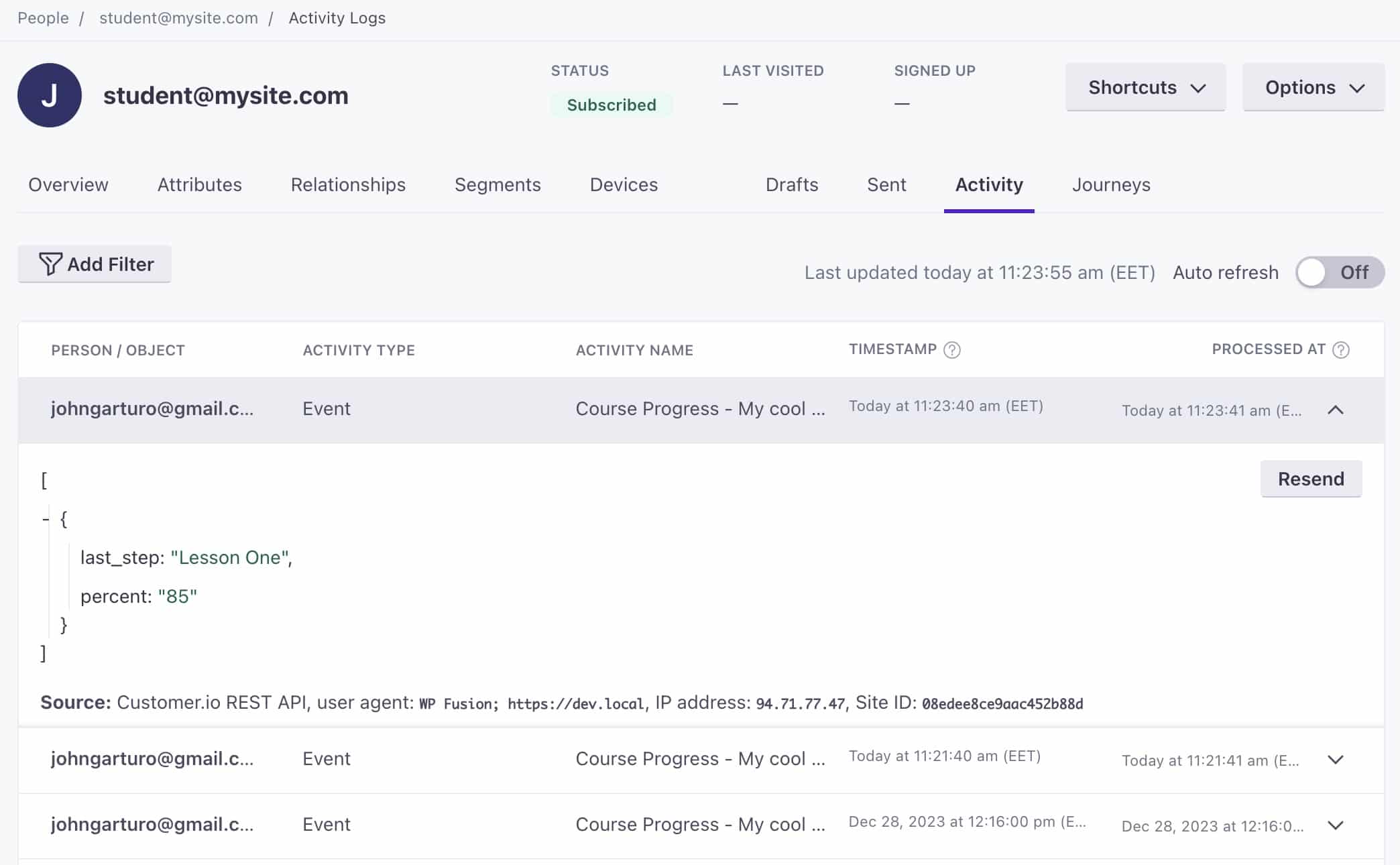
A screenshot of an activity log interface displays subscriber details, including email (student@mysite.com) and status (Subscribed). It also highlights various events like course progress and a customer HTTP request, all timestamped, seamlessly integrating with WP Fusion CRM.
This person’s event log shows their course progress from LearnDash or LifterLMS in Customer.io.

You can click on any event to expand it and see its properties.

Events can also be used as campaign triggers.
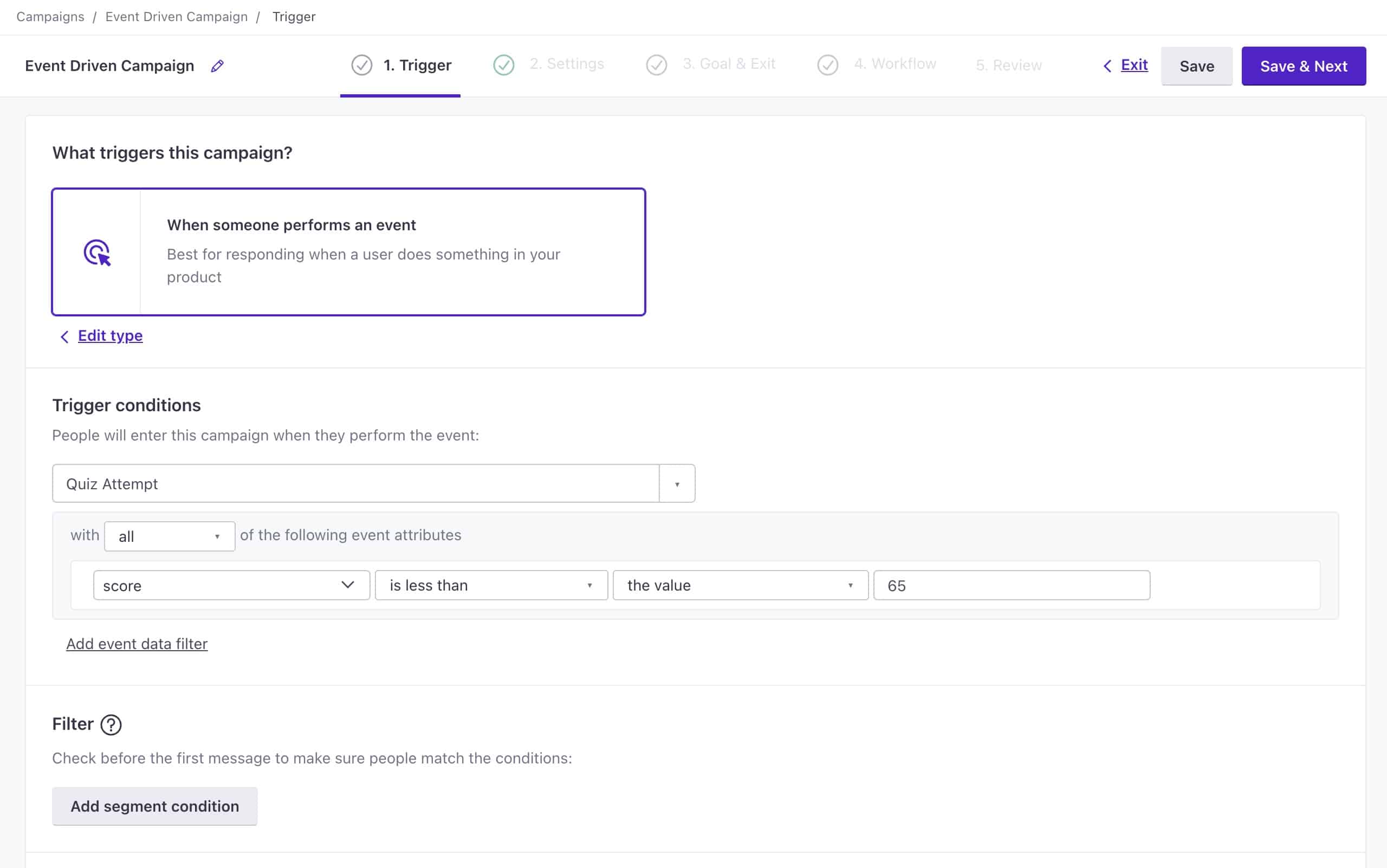
Screenshot of a web-based platform for setting up an event-driven campaign, seamlessly incorporating WP Fusion CRM integration. The page is titled Trigger, with options to activate events based on user actions, like a quiz attempt with scores less than 65, featuring filters and conditions.
In this example, the campaign is triggered when a Quiz Attempted event fires with a score less than 65%.

And events can be used for campaign goals and conversions.
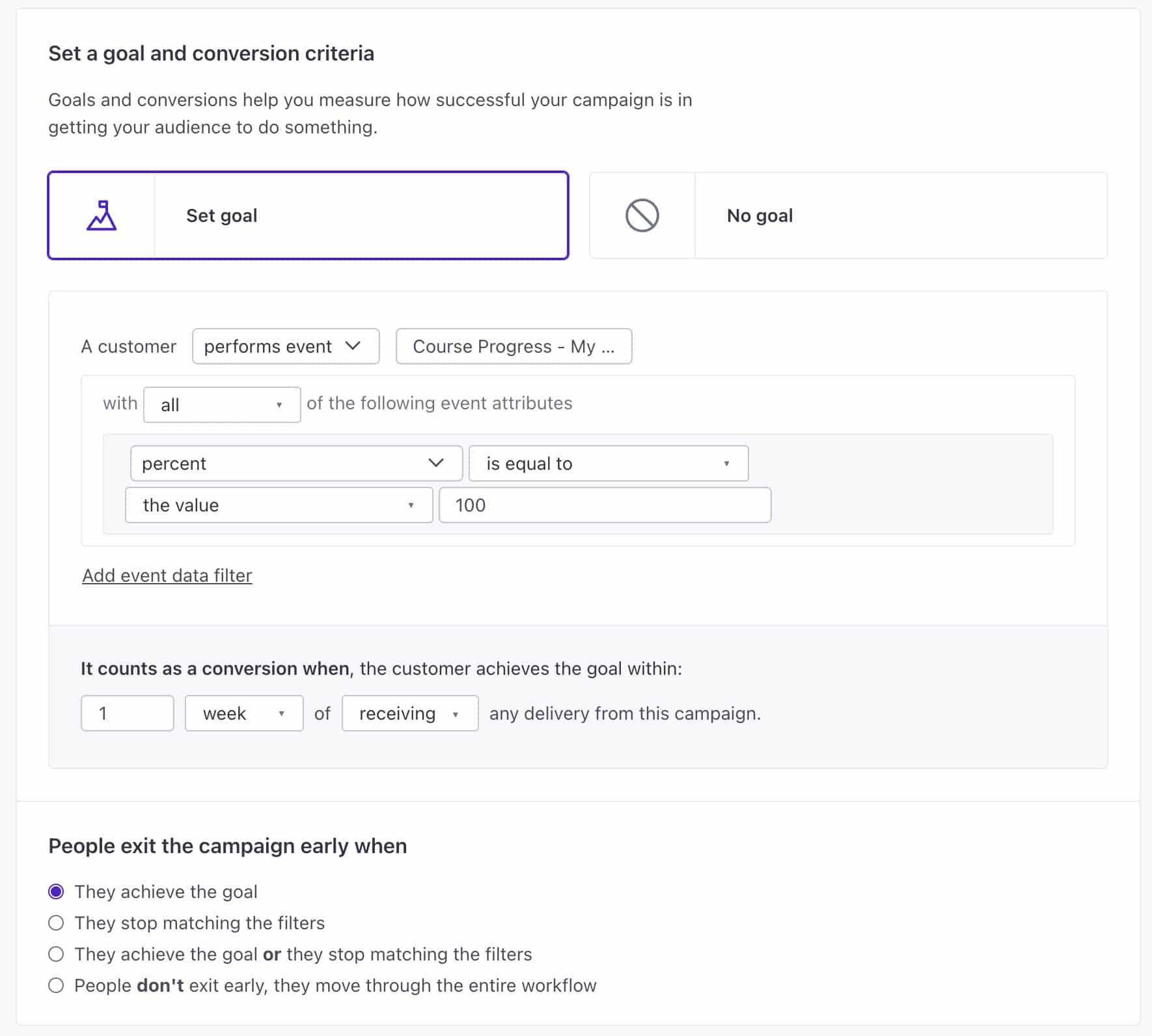
Interface for setting up goals and conversion criteria in a campaign, now featuring WP Fusion CRM integration. It includes sections for setting a goal, defining event attributes, and conditions for early campaign exit. Options include event type, progress, and conversion timing.
In this example, the campaign ends when the Course Progress goal is triggered with a percent of 100 (i.e. the course is marked complete).

Was this helpful?